
Kyiv Metro

Written by James M. Young

Updated 26th November 2026

Background

Location Kyiv, Ukraine
First line opened 1960
Last major update 2013

Open lines 3

Open stations 52
Kyiv is the capital of Ukraine. The metro opened on 6th November 1960 with 5 stations on what is now Line M1. The network now has 3 lines and 52 stations. The lines all meet in the city centre, with interchanges between each pair of lines.
Trains are powered by a third rail and run on 1,520mm gauge track.
Many stations have been renamed over the years, mostly in 1990 to 1993 after Ukraine became independent and again in 2023.
Line M1
Line colour Red
Opened 1960
Stations 18
Line M1, known as the Sviatoshynsko-Brovarska line, is the oldest line on the network. The first part opened on 6th November 1960 between Vokzalna and Dnipro. The line was then extended as follows:
- Vokzalna to Zavod Bilshovyk (now Shuliavska) opened in 1963.
- Dnipro to Darnytsia opened in 1965, taking the line across the river Dnipro.
- Darnytsia to Komsomolska (now Chernihivska) opened in 1968.
- Zavod Bilshovyk to Sviatoshyn opened in 1971.
- Komsomolska to Pionerska (now Lisova) opened in 1979.
- Sviatoshyn to Akademmistechko opened in 2003.
Gallery
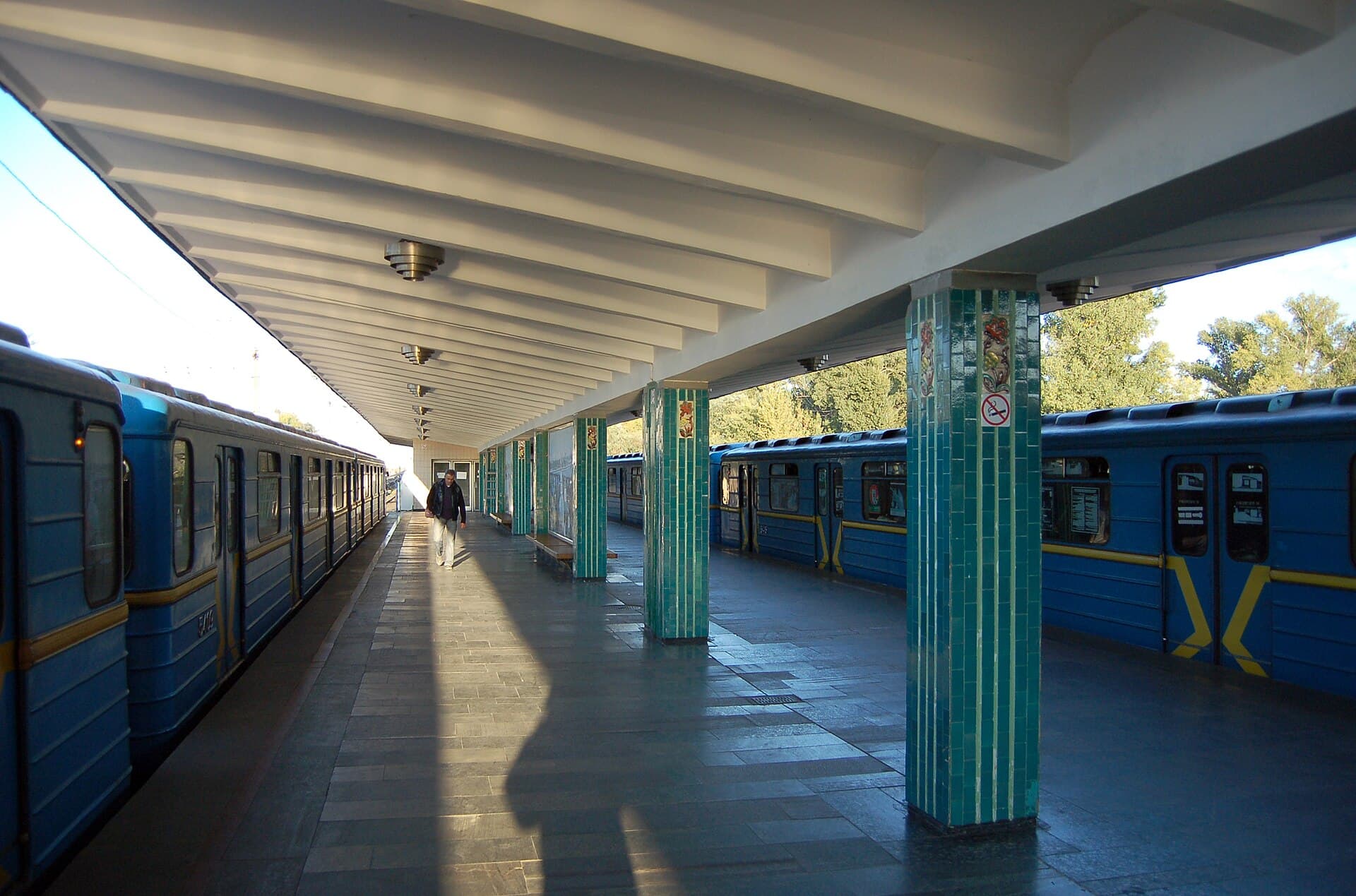 Platforms at Hidropark station in 2011. Photo by AMY3/3
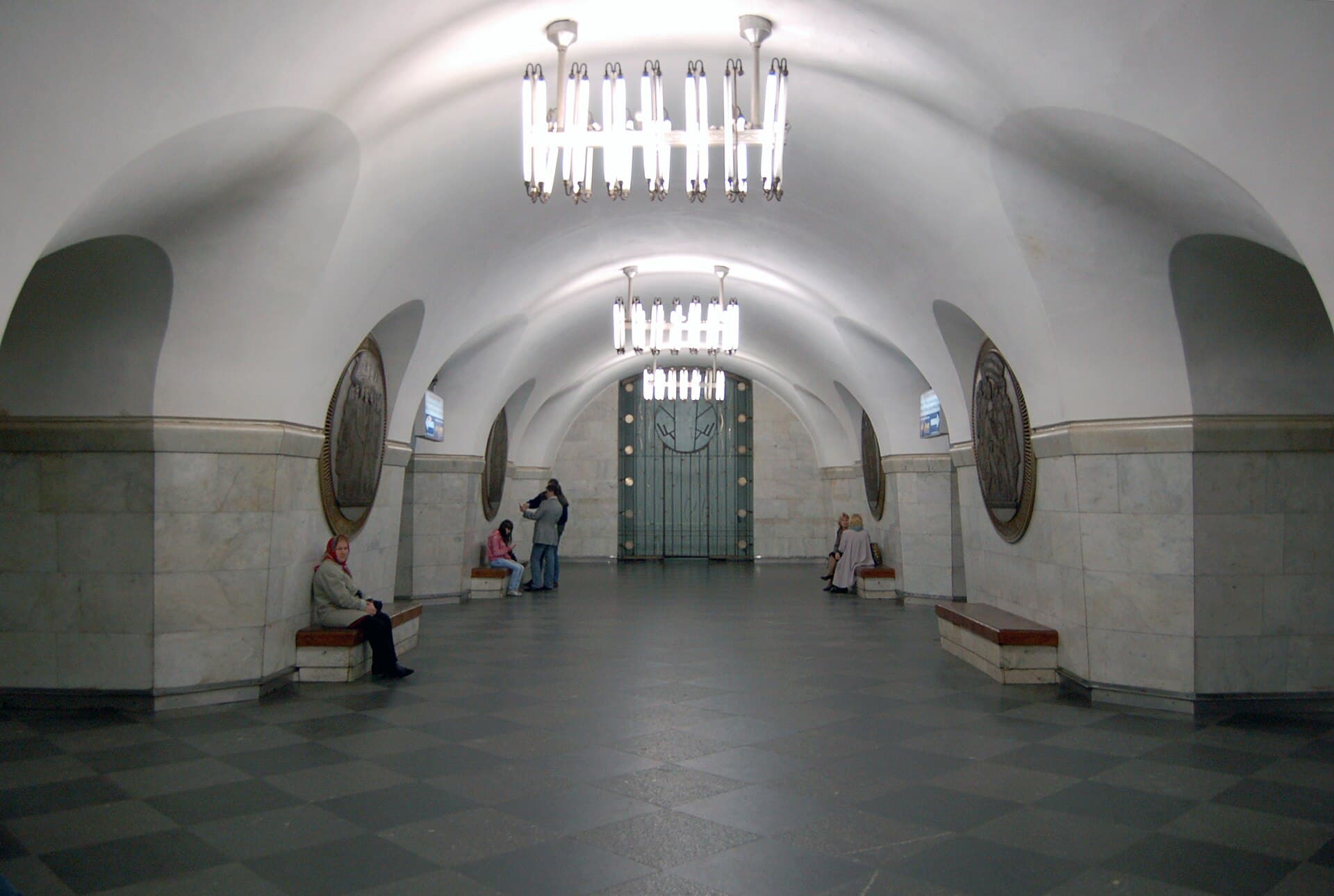 Central hall of Vokzalna station in 2010. Photo by AMY1/3
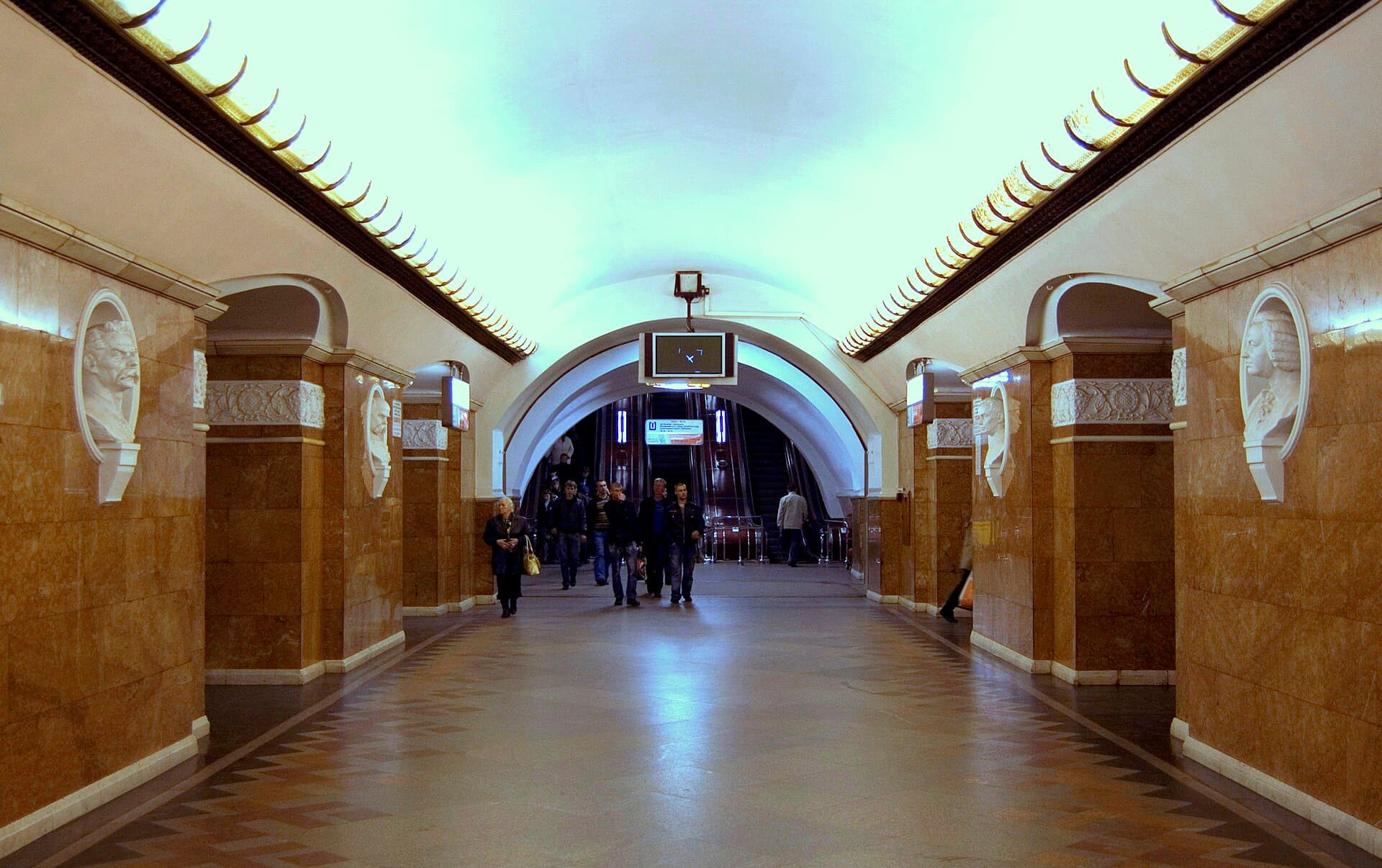 Central hall of Universytet station in 2010. Photo by AMY2/3
- Platforms at Hidropark station in 2011. Photo by AMY3/3
- Central hall of Vokzalna station in 2010. Photo by AMY1/3
Line M2
Line colour Blue
Opened 1976
Stations 18
Line M2, known as the Obolonsko-Teremkivska line, opened on 17th December 1976 between Chervona Ploshcha (now Kontraktova Ploshcha) and Ploshcha Kalinina (now Maidan Nezalezhnosti), where it connects with Line M1 at Khreshchatyk. The line was then extended as follows:
- Chervona Ploshcha to Prospekt Korniichuka (now Obolon) opened in 1980.
- Ploshcha Zhovtnevoii Revolutsii (now Maidan Nezalezhnosti) to Respublikanskyi Stadion (now Olimpiiska) opened in 1981.
- Prospekt Korniichuka to Heroiv Dnipra opened in 1982.
- Respublikanskyi Stadion to Dzerzhynska (now Lybidska) opened in 1984.
- Lybidska to Vasylkivska opened in 2010.
- Vasylkivska to Vystavkovyi Tsentr opened in 2011.
- Vystavkovyi Tsentr to Ipodrom opened in 2012.
- Ipodrom to Teremky opened in 2013.
Gallery
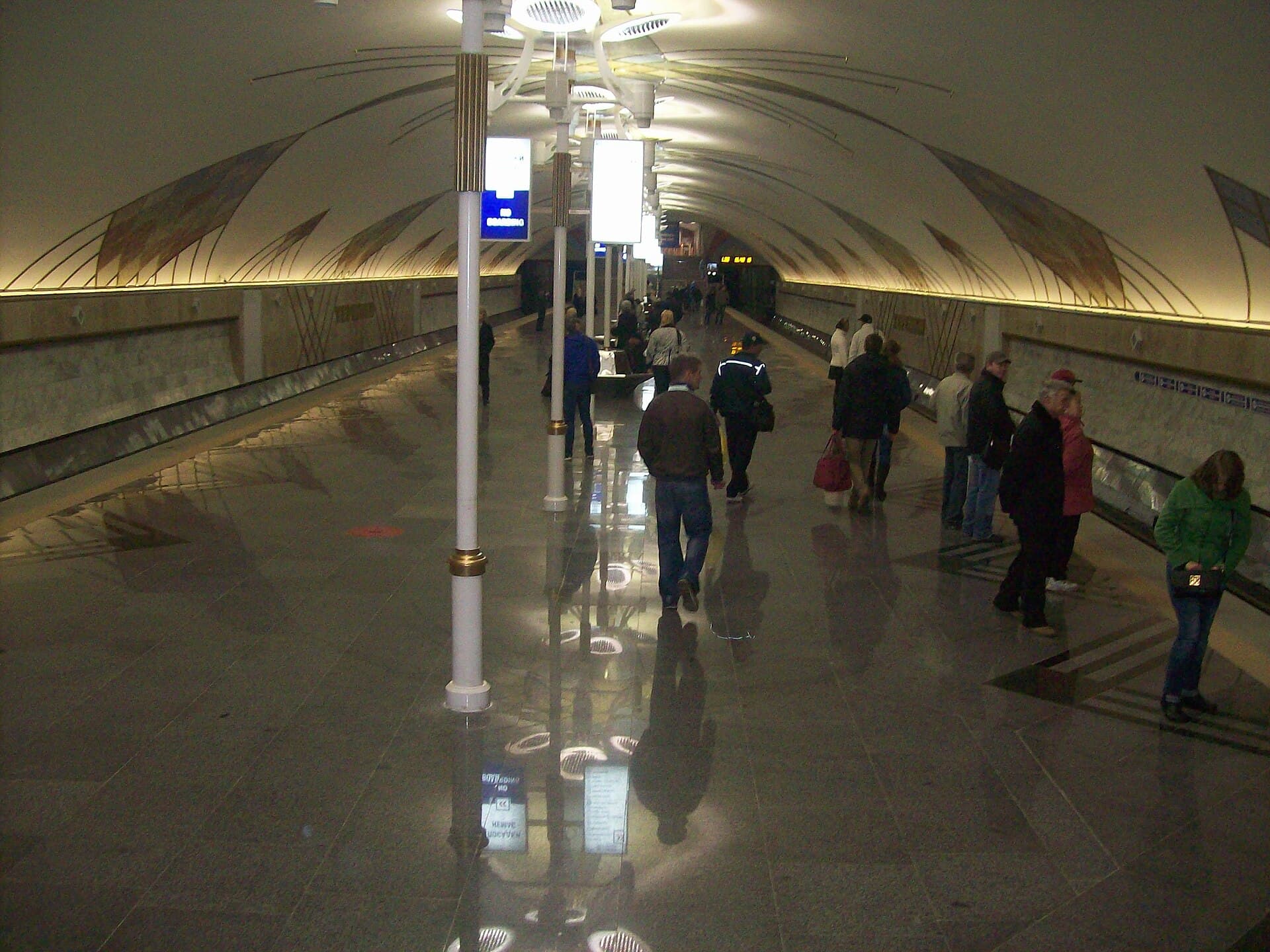 Platform at Teremky station in 2013. Photo by Yulia Romero3/3
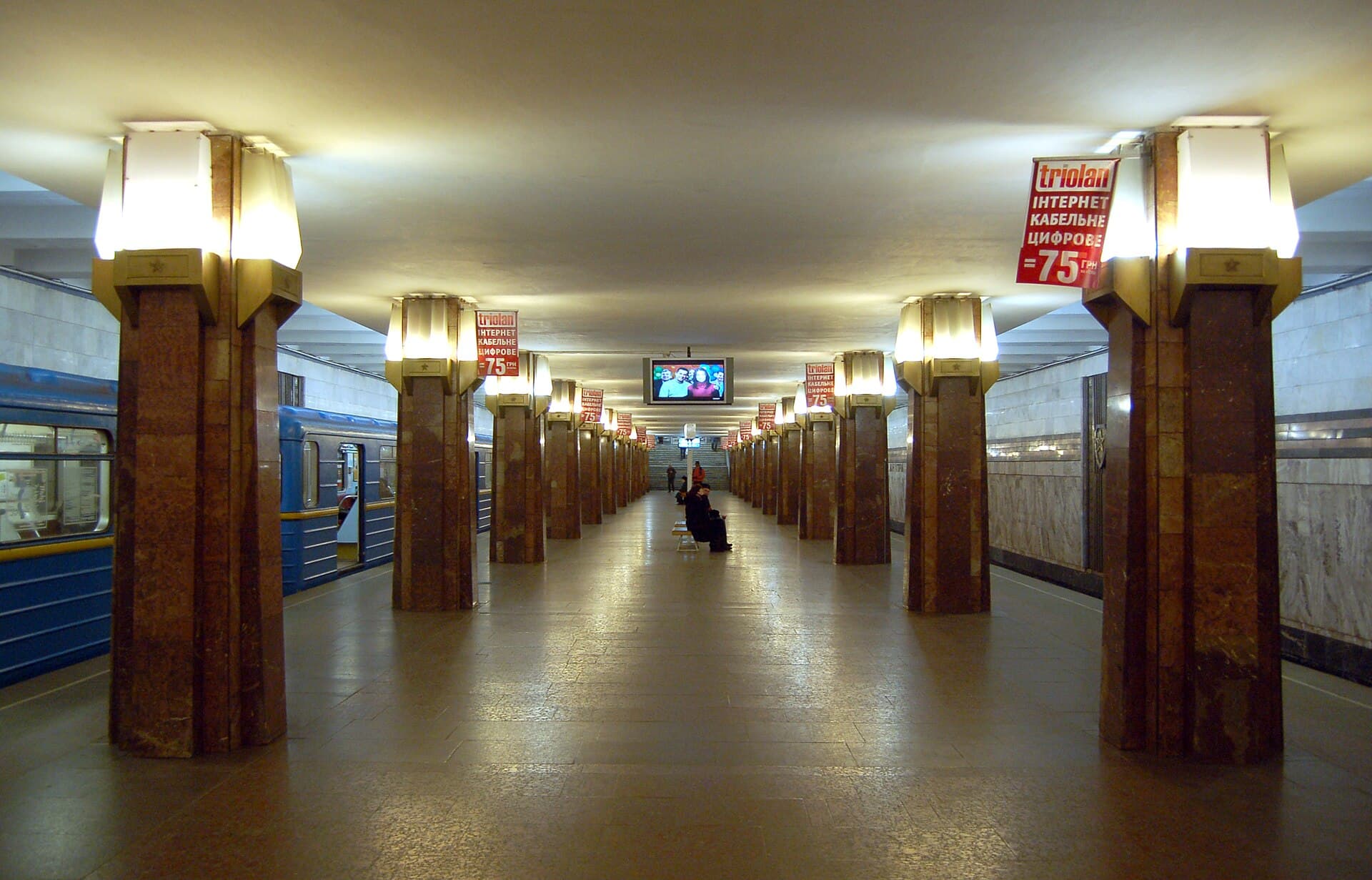 Interior of Heroiv Dnipra station in 2011. Photo by AMY1/3
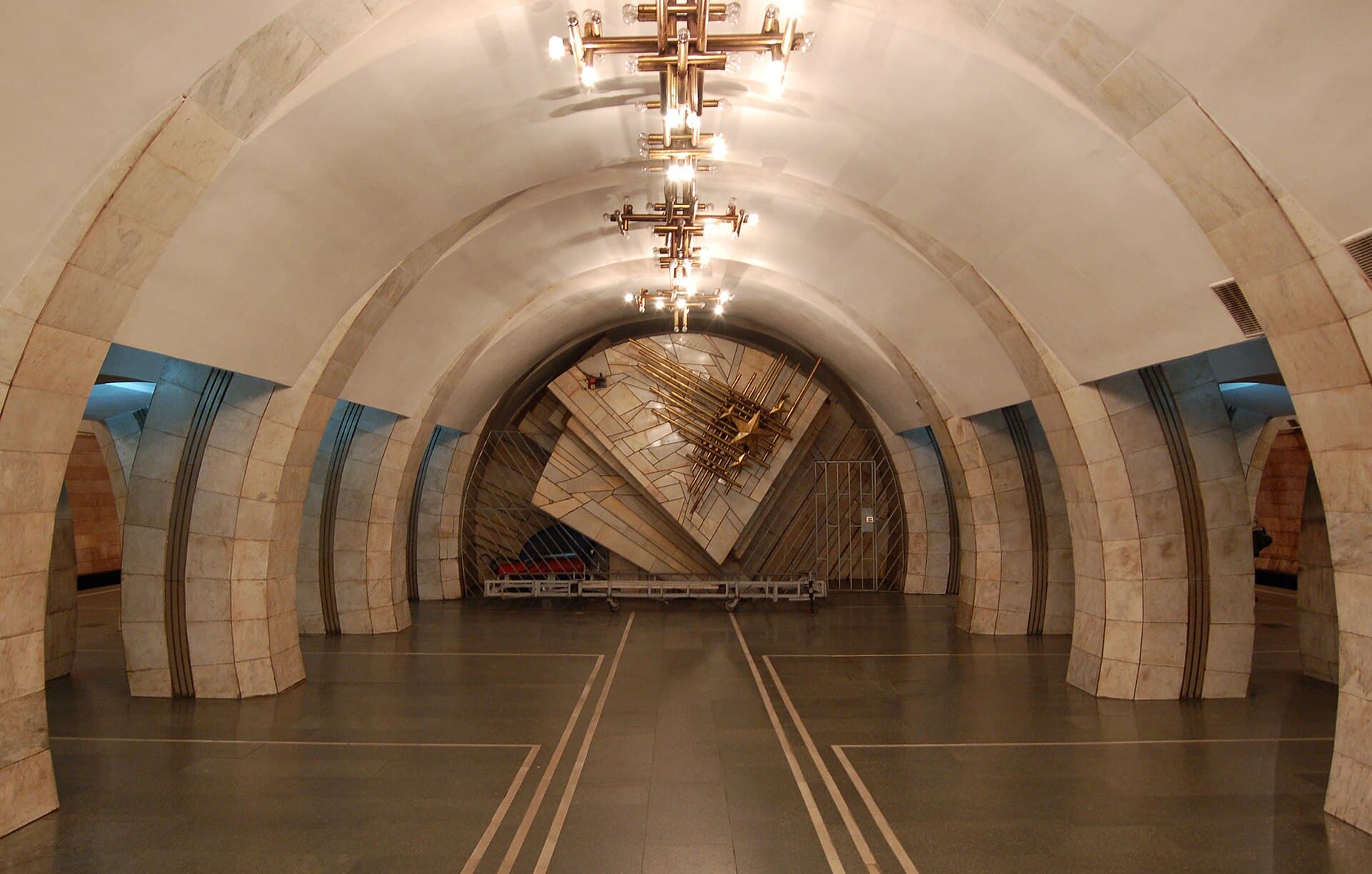 Central hall of Lybidska station in 2010. Photo by AMY2/3
- Platform at Teremky station in 2013. Photo by Yulia Romero3/3
- Interior of Heroiv Dnipra station in 2011. Photo by AMY1/3
Line M3
Line colour Green
Opened 1989
Stations 16
Line M3, known as the Syretsko-Pecherska line, opened on 31st December 1989 between Zoloti Vorota and Mechnikova (now Klovska). It is the newest of the 3 lines and has been extended in many small steps at both ends:
- Mechnikova to Vydubychi opened in 1991.
- Vydubychi to Osokorky opened in 1992.
- Osokorky to Kharkivska opened in 1994.
- Zoloti Vorota to Lukianivska opened in 1996.
- Lukianivska to Dorohozhychi opened in 2000.
- Dorohozhychi to Syrets opened in 2004.
- Kharkivska to Boryspilska opened in 2005.
- Boryspilska to Chervonyi Khutir opened in 2008.
Pecherska and Vyrlytsia were added later as infill stations, in 1997 and 2006.
Gallery
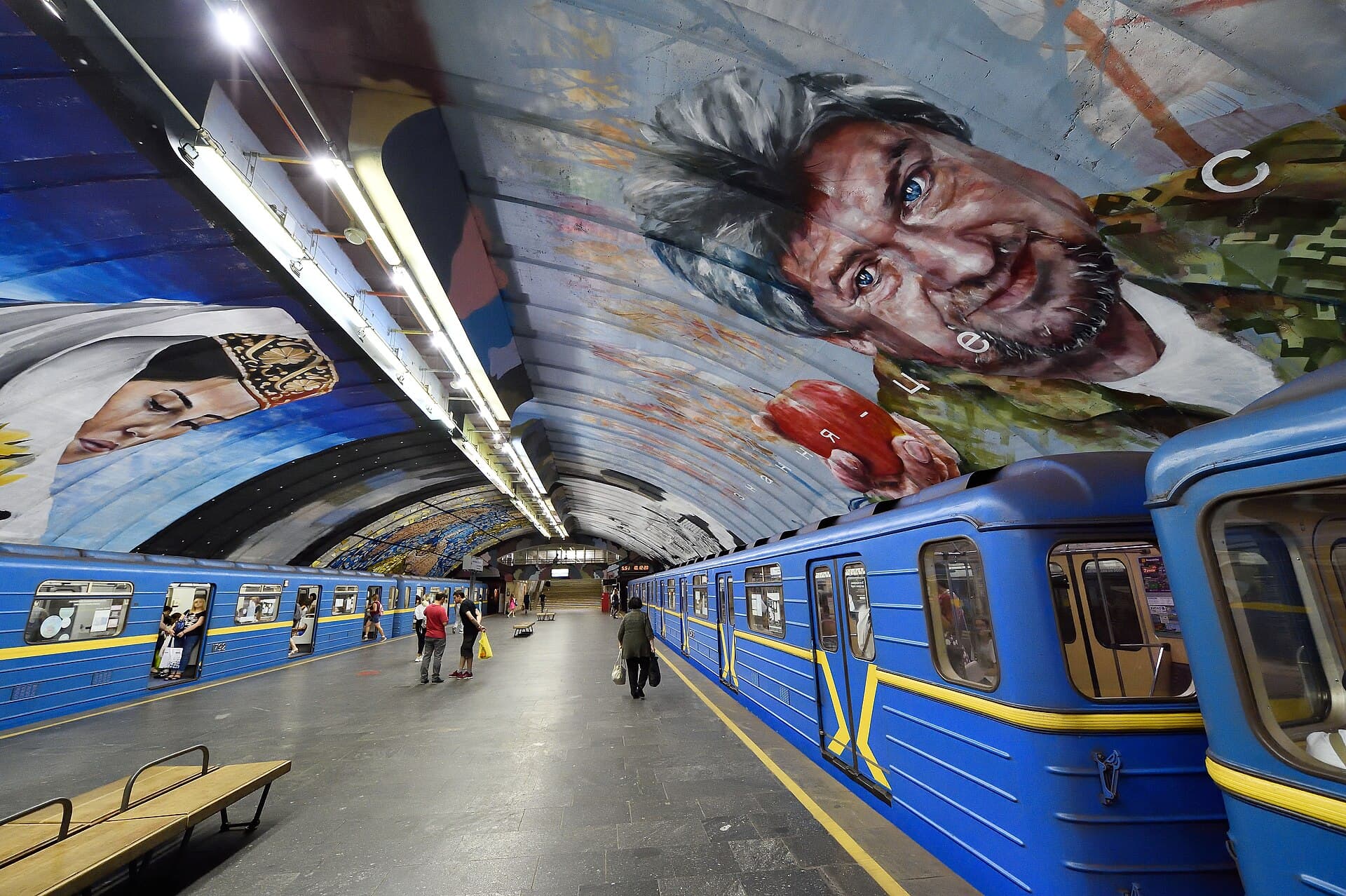 Osokorky station in August 2019. Photo by Tim Adams3/3
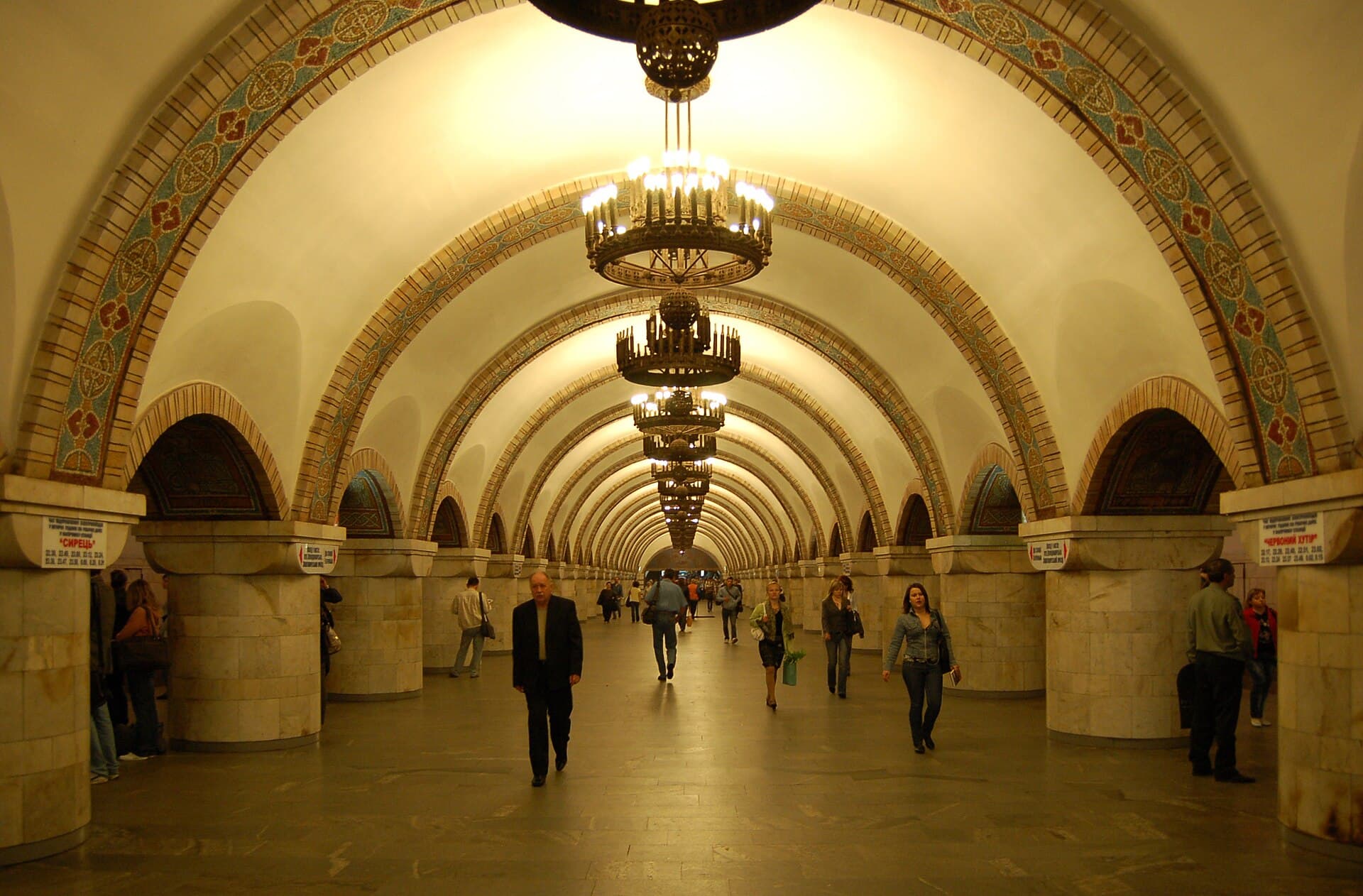 Central hall of Zoloti Vorota station in 2010. Photo by AMY1/3
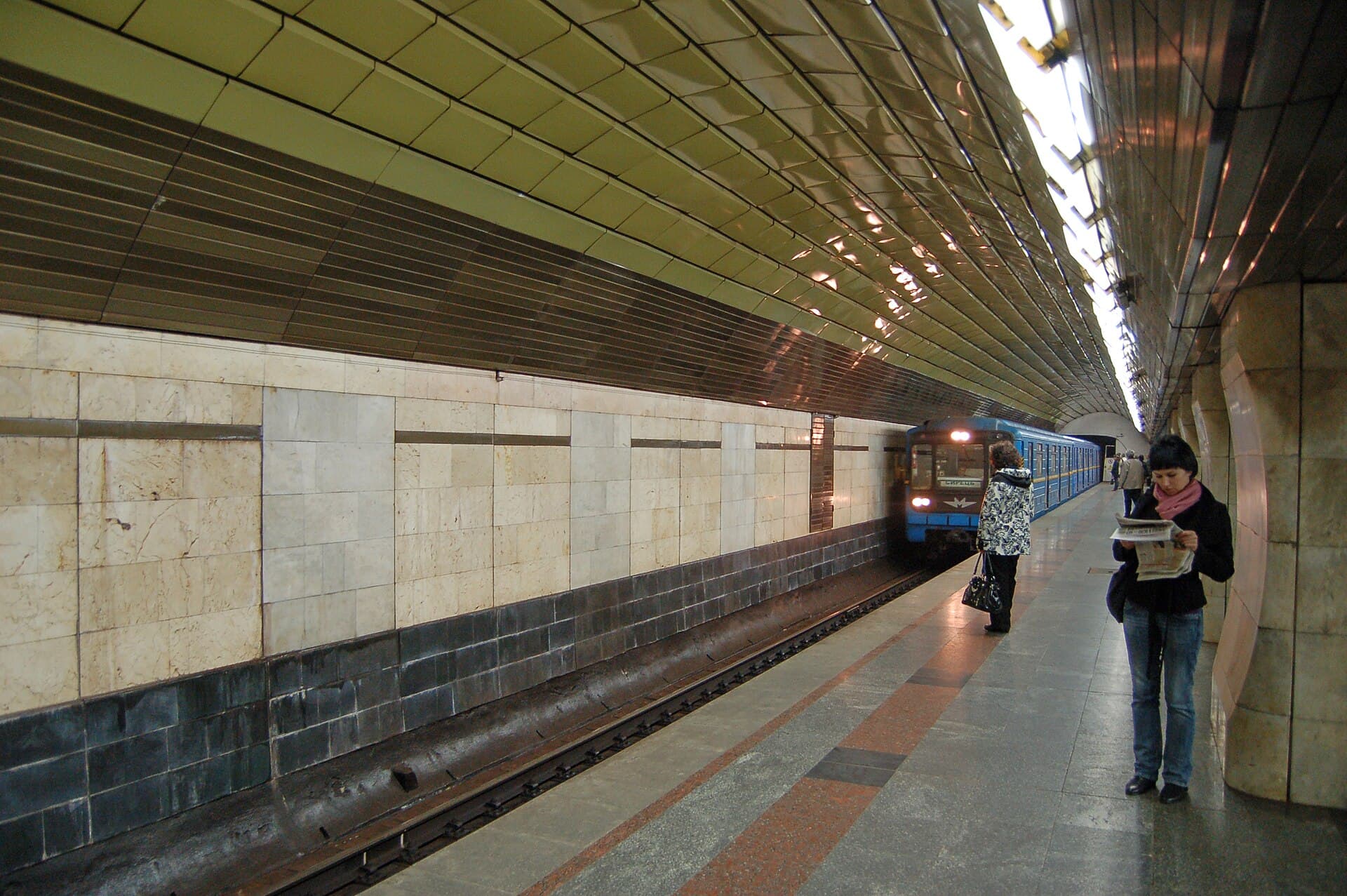 Platform at Klovska station in 2010. Photo by AMY2/3
- Osokorky station in August 2019. Photo by Tim Adams3/3
- Central hall of Zoloti Vorota station in 2010. Photo by AMY1/3
Recent changes
Since the full-scale invasion of Ukraine in February 2022 the metro has been used as a shelter during air raids, with many stations staying open around the clock. Some stations have been damaged by attacks, and in December 2023 flooding closed part of Line M2 between Lybidska and Demiivska for several months.
In 2023 a number of stations were renamed, including Ploshcha Lva Tolstoho to Ploshcha Ukrainskykh Heroiv and Druzhby Narodiv to Zvirynetska.
Trains
All lines use trains powered by a third rail at 825 V DC. The network has used a number of different types of train throughout its life.
The first trains on the network were Type D, which were used from 1960 to 1969. Types Ezh, E and Ema-502 were introduced from 1970 and are still in use, with some modernised as Type E-KM from 2014.
The 81-717 family of trains has been used since 1978 and forms the largest part of the fleet. Newer trains include the 81-7021, which entered service in 2005, and the 81-540.2K, which entered service in 2008. A Type 81-553 Slavutych train was also used between 2001 and 2010.
In 2023 Warsaw donated 60 second-hand 81-717 and 81-713 cars to Kyiv.
Gallery
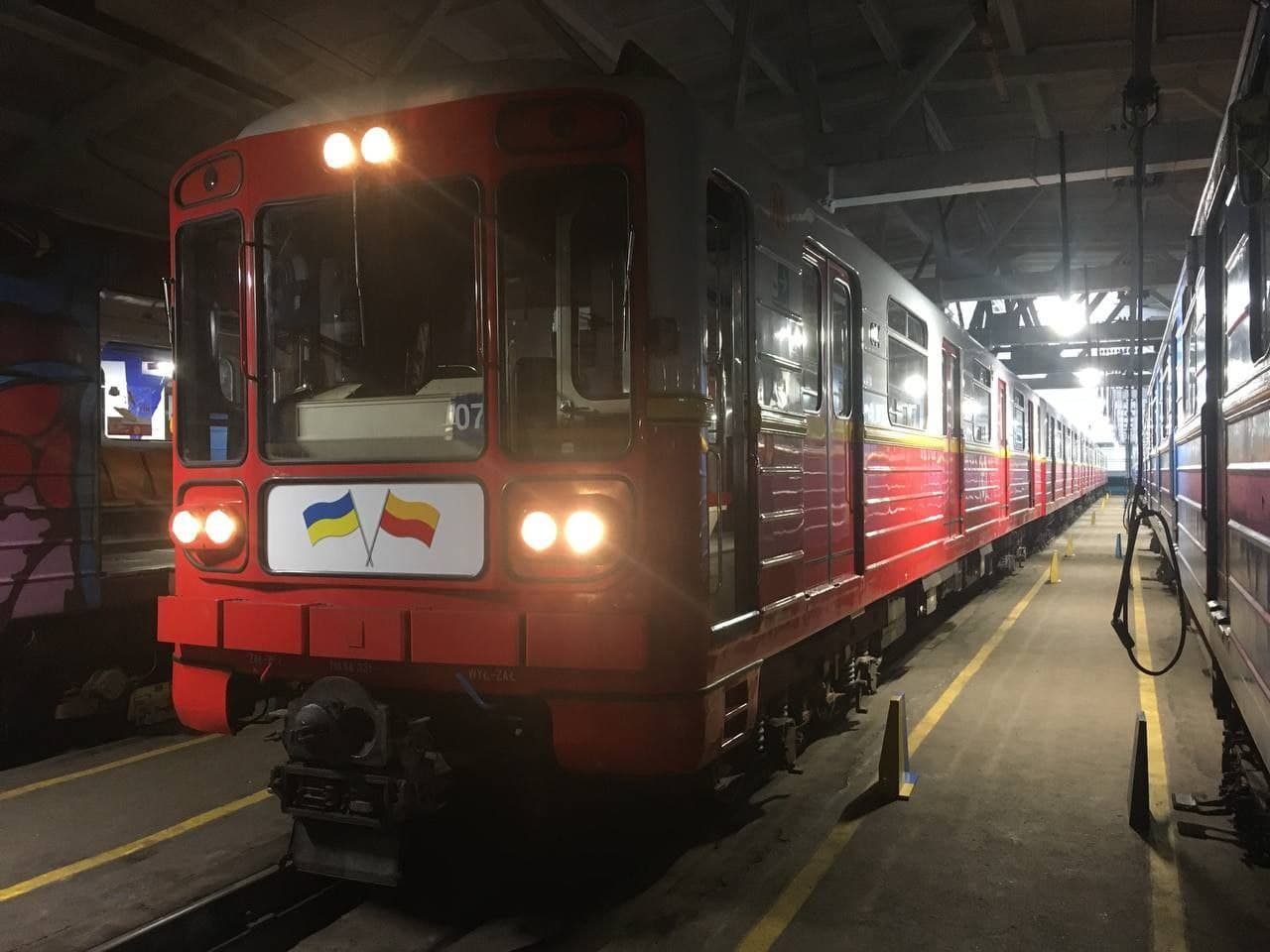 Trains donated by Warsaw at Darnytsia depot in May 2023. Photo by Yehor Lapin3/3
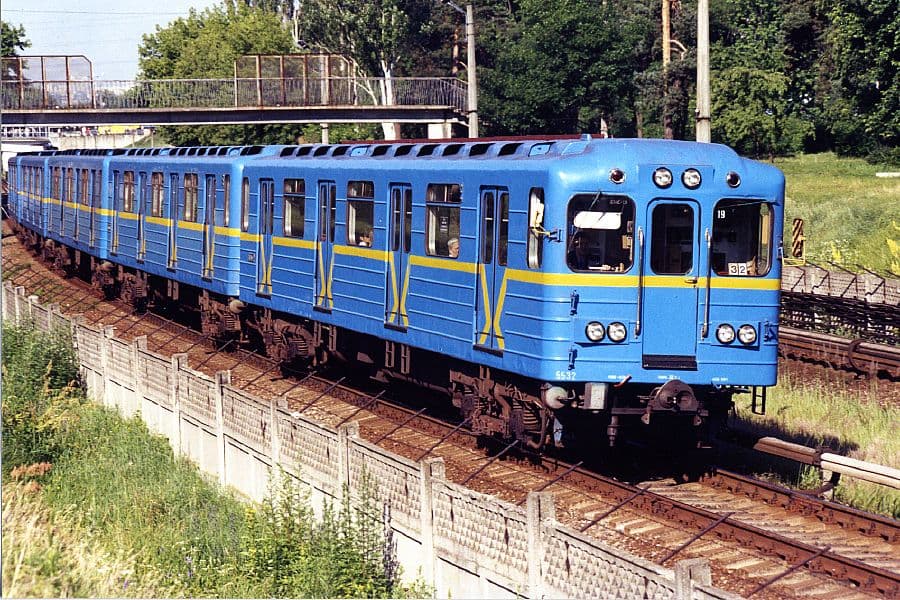 Type Ezh train near Chernihivska station in 2005. Photo by Serguei Trouchelle1/3
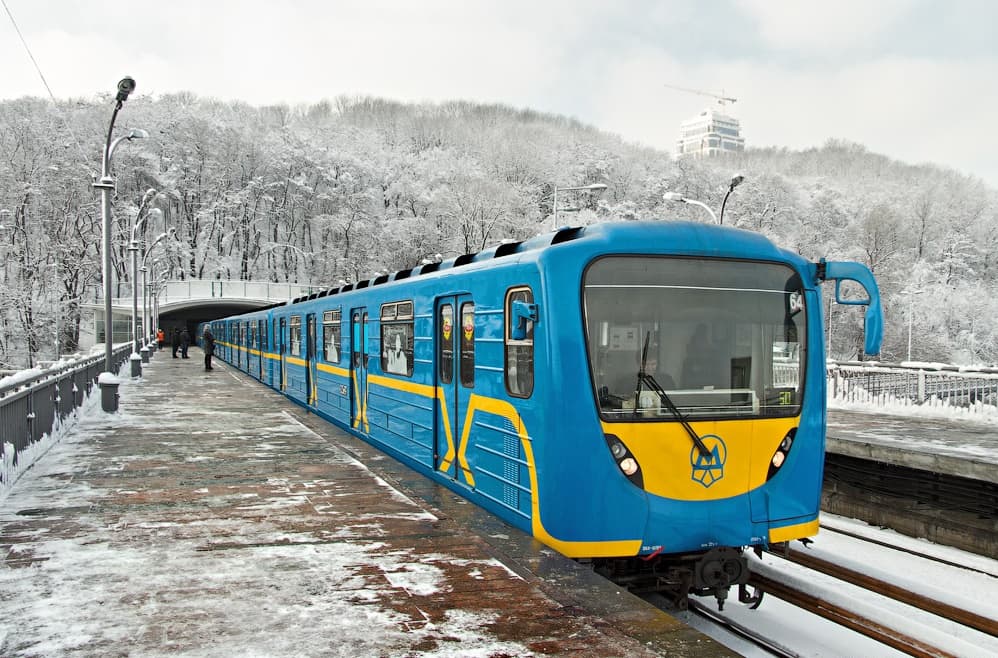 Type 81-540.2K train at Dnipro station in 2012. Photo by Oleg Totsky2/3
- Trains donated by Warsaw at Darnytsia depot in May 2023. Photo by Yehor Lapin3/3
- Type Ezh train near Chernihivska station in 2005. Photo by Serguei Trouchelle1/3
Future
A fourth line, Podilsko-Vyhurivska, has been planned for many years and is the only new line where construction has started. Other lines and an extension of Line M1 beyond Lisova have also been proposed, but there are no firm dates for any of them.
Enjoyed this content? Share it with your friends!


More maps to discover
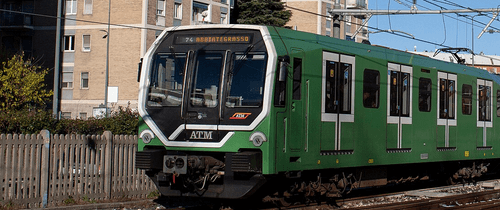
5 line metro serving Milan
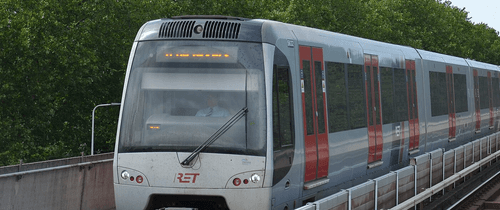
5 line metro serving Rotterdam and The Hague

Driverless metro in Copenhagen, Denmark




Disclaimer
Please note the map is for display purposes only. This should only be used as a guide on how the network has changed over time and not as a travel tool. Please see each networks's official website for an up-to-date map for travelling around that city.
Map design is loosely based on the original concept by Harry Beck for London Underground.
Some things to note about maps:
- Only shows passenger lines.
- Does not show different services on lines.
- Shows the companies who ran services over lines, not who owned them.
- Only shows how lines intersect and in no way represents where stations are in real life, either geographically or by distance.
- Only shows stations as intersections if you can walk between lines without leaving the station(s).
- Only shows changes between years. If a station closed and opened in the same year this will not be shown etc.
- Does not show interchanges between other travel networks.
Images are copyright to their respective owners.
If you spot anything that is wrong, have suggestions or comments or suitable photos for a network, then please get in touch on our contact page.